
If you are considering buying property in Spain, sooner or later you will come across one topic that generates a lot of headlines — and a great deal of confusion: okupas.
International media often portrays the situation in an alarmist way, suggesting that anyone can break into your property in Spain and remain there indefinitely without the owner being able to do anything. This perception has made many foreign buyers hesitant about investing in the Spanish property market. However, the reality is far more nuanced…
While illegal occupation does exist, it is far less common than many people think, and in most cases it affects very specific types of properties and locations. Understanding how the legal system works in Spain — and the different forms of occupation that can occur — is essential for anyone planning to buy real estate in the country.
In this guide, we will explain:
1. What “okupación” actually means in Spain
2. The 3 different types of occupation that are often confused
3. What the law says about illegal occupation
4. How long eviction procedures can take
5. Practical strategies to reduce the risk when buying property in Spain
For international buyers, understanding these issues is an important part of conducting proper due diligence before purchasing property in Spain.
What Does “Okupación” Mean in Spain?
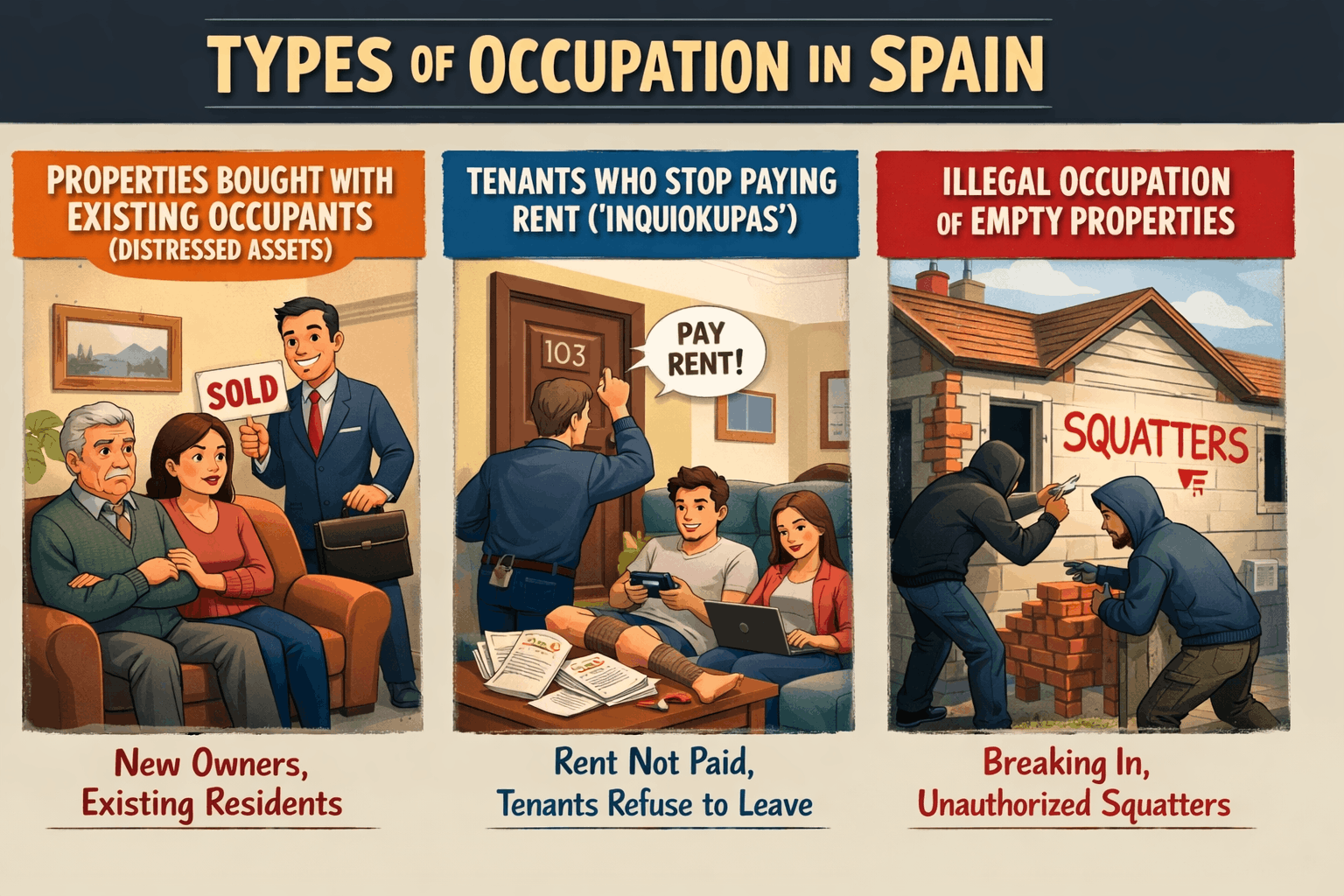
The word “okupa” refers to a person who occupies a property without the consent of the owner. However, in practice the term is often used incorrectly. Many situations described as “okupación” in the media are actually very different legal scenarios. In Spain, problems related to possession of property generally fall into three categories:
1. Properties bought with existing occupants (distressed assets)
2. Tenants who stop paying rent (“inquiokupas”)
3. Illegal occupation of empty properties
Each of these situations has different legal implications and different solutions. Understanding the differences is critical for property buyers.
Why the Concept of “Property” Is Different in Spain
Before exploring the types of occupation, it is important to understand a key concept in Spanish property law:
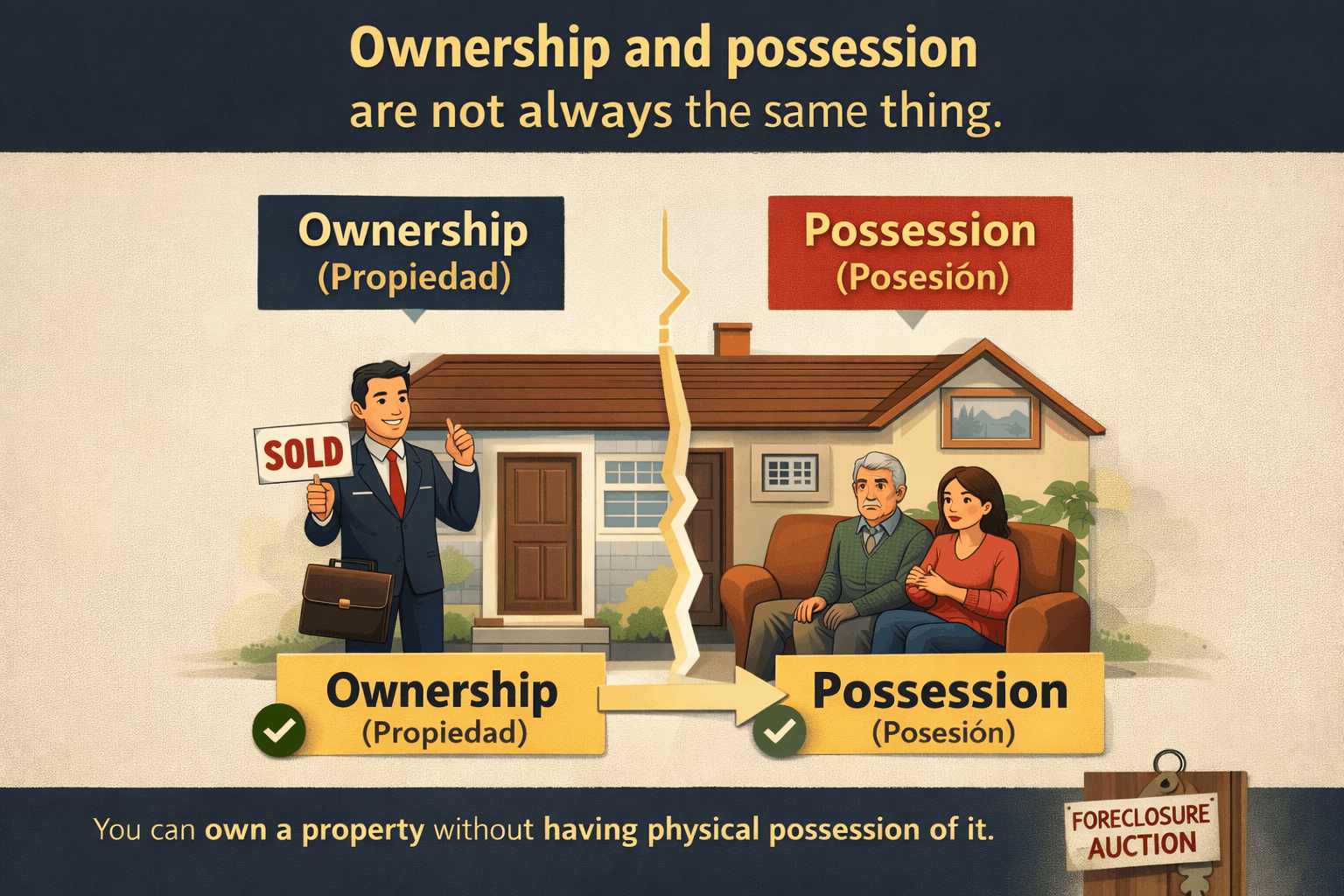
Ownership and possession are not always the same thing.
In many Anglo-Saxon legal systems — such as the United States or the United Kingdom — ownership and possession are often closely linked. In Spain, however, the law clearly distinguishes between:
– Property ownership (propiedad)
– Physical possession (posesión)
This means it is legally possible to own a property without having physical possession of it. For example: an investor may buy a property through a foreclosure auction, but the previous owner may still be living inside the property.
In these cases, the new owner may need to initiate legal procedures to recover possession. This distinction explains why some property investments in Spain are sold at large discounts.
Type 1: Buying a Property With Existing Occupants
The first and most complex scenario involves buying a property that already has someone living inside it. This usually occurs in distressed property investments such as:
– Foreclosed homes
– Properties purchased at judicial auctions
– Non-performing mortgage portfolios
– Bank-owned repossessed assets
In these situations, the previous owner may still occupy the property even after the foreclosure process. These properties are often sold with significant discounts, sometimes even 50% below market value. However, these discounts exist for a reason…
Why These Properties Are Risky
If the occupant refuses to leave, the new owner may need to initiate a legal eviction process. In some cases, if the occupant can demonstrate economic vulnerability or risk of social exclusion, eviction procedures may be delayed. For investors experienced in distressed assets, this risk can be acceptable. But for most international buyers looking for a retirement or holiday home this type of investment is not recommended.
Professional investors sometimes negotiate directly with the occupant. This strategy, known as cash for keys, involves offering financial compensation for the occupant to leave voluntarily. Although this approach can resolve situations quickly, it requires legal guidance, negotiation experience and careful due diligence. For typical foreign buyers, avoiding properties with existing occupants is usually the safest option.
Type 2: “Inquiokupas” — Tenants Who Stop Paying Rent
Another situation that is often confused with illegal occupation involves tenants who stop paying rent. In Spain, these tenants are often referred to as “inquiokupas“. Unlike illegal squatters, these individuals originally entered the property legally with a rental contract. The issue arises when the tenant stops paying rent and refuses to leave the property.
Why This Happens
Spain has relatively strong tenant protection laws, especially in long-term residential rental contracts. These protections are designed to guarantee housing stability. However, they can also make eviction procedures slower in cases of non-payment.
If a tenant stops paying rent, the landlord must initiate a desahucio por impago de alquiler (eviction for non-payment). The process generally involves:
1. Filing a claim in court
2. Notifying the tenant
3. Allowing time for payment or defence
4. Obtaining an eviction order
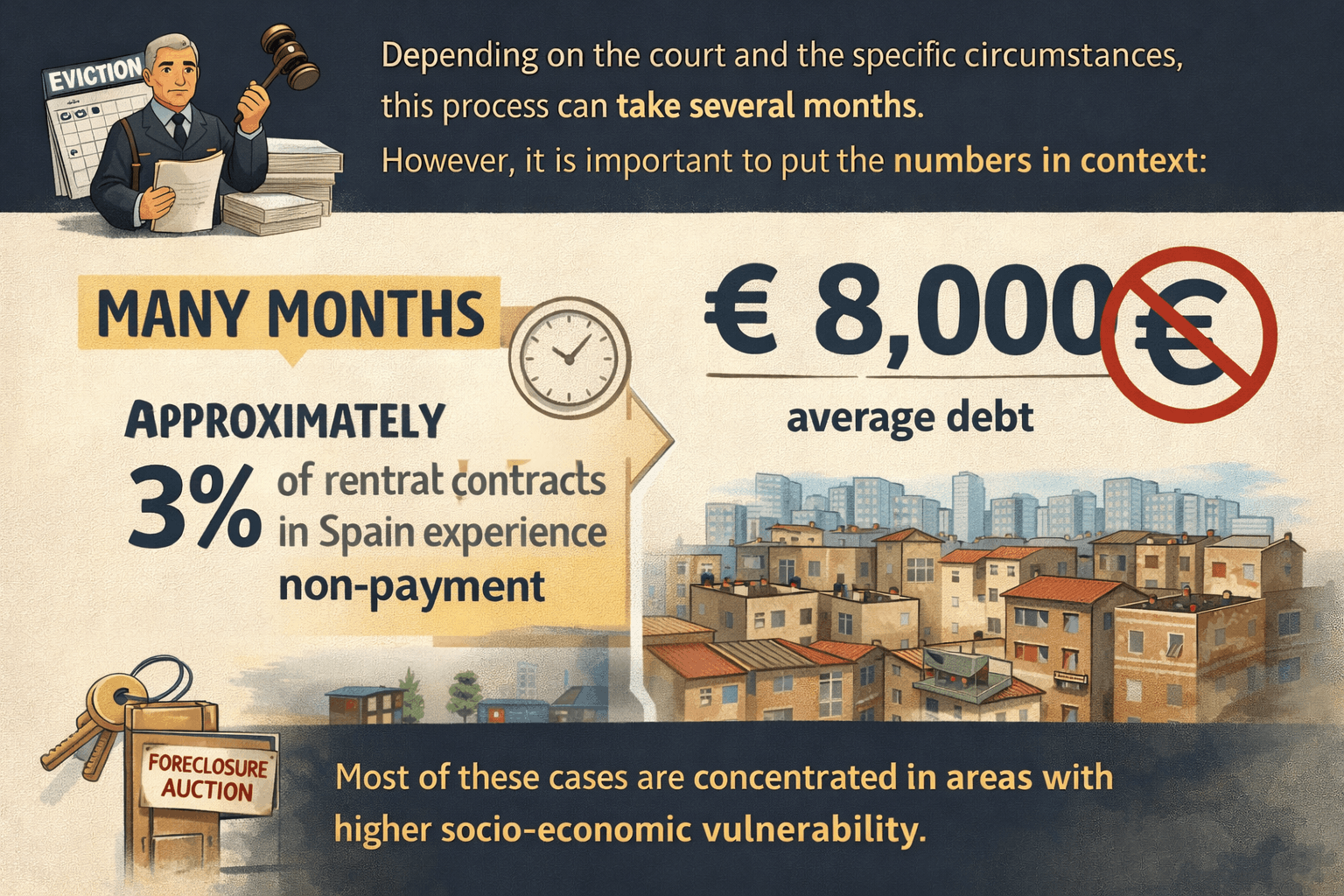
Depending on the court and the specific circumstances, this process can take several months (and probably even years). However, it is important to put the numbers in context: approximately 3% of rental contracts in Spain experience non-payment, with an average debt of around €8,000. Most of these cases are concentrated in areas with higher socio-economic vulnerability.
Why Landlords Screen Tenants Carefully
Because eviction procedures can take time, many landlords in Spain perform strict tenant screening.
Typical requirements include employment contracts, proof of income, tax returns or even rental insurance guarantees. While tenant protection laws aim to protect vulnerable households, they have also had an unintended consequence: many landlords perceive higher risk and therefore avoid renting to financially vulnerable tenants.
Type 3: Illegal Occupation of Empty Properties
The scenario most people imagine when hearing about okupas is illegal occupation. This occurs when someone enters a property without permission and without any legal title.
This type of occupation usually affects empty homes, second residences left vacant for long periods (many years empty), bank-owned properties and unfinished developments after the 2008 crisis. Most occupied homes belong to financial institutions or investment funds.
For example, in some urban areas a large percentage of occupied properties are bank-owned homes that remained empty for years after the financial crisis.
If illegal occupation is detected quickly — typically within the first 48 hours — the police can remove the occupants immediately. This is because the situation can be treated as trespassing or unlawful entry. However, if the occupants manage to establish themselves in the property for a significant period of time (days/weeks), the owner usually needs to initiate a judicial procedure to recover possession.
Eviction procedures for illegal occupation usually take between 3 to 8 months, depending on the court and the specific circumstances. While this may sound slow compared to some countries, it is important to note that the legal system does provide mechanisms to recover possession.
Where Illegal Occupation Is Most Common
Another important factor for foreign buyers to understand is location.
Illegal occupation tends to occur in buildings with many empty units, distressed neighbourhoods, abandoned developments or bank-owned housing portfolios. It is far less common in established residential neighbourhoods, coastal second-home areas, well-maintained apartment buildings and gated communities.
This means the risk is significantly lower for the typical international buyer looking for a holiday home on the Costa Blanca, a retirement property on the Costa del Sol or a relocation property in cities like Valencia or Madrid.
How to Reduce the Risk of Okupas
The risk of occupation can be reduced dramatically with a few practical measures.
Install a Security Alarm
One of the most effective deterrents is installing an alarm system. Properties with alarms are rarely targeted, because the alarm company can immediately notify the police.
Avoid Leaving Properties Empty for Long Periods
Homes left vacant for extended periods are more vulnerable. If you own a second home in Spain, consider periodic visits, hiring property management services or installing remote monitoring systems.
Choose the Right Property
Risk can also be reduced by avoiding distressed assets, properties sold with occupants or buildings with many empty units. This is one of the reasons why professional property search and due diligence are so important.
Is Okupación a Real Risk for Foreign Buyers?
Despite the media attention, okupación is not a widespread risk for most property buyers in Spain. In reality:
– The majority of cases occur in very specific locations
– Many occupied properties belong to banks
– Simple security measures reduce the risk significantly
For foreign buyers purchasing property in established areas or coastal locations, the probability of encountering this issue is very low. The biggest risk usually comes from buying property without proper legal checks.
The Importance of Professional Guidance When Buying Property in Spain
Buying property in Spain involves several steps that may be unfamiliar to international buyers, including:
– Obtaining an NIE number
– Signing a reservation contract
– Conducting legal due diligence
– Completing the purchase before a Spanish notary
Working with experienced professionals helps ensure that the property you buy is legally secure.
The topic of okupas in Spain often generates concern among international buyers, largely because of sensationalist headlines and misunderstandings about the legal system. However, once you understand the different situations that fall under the umbrella of “occupation,” the picture becomes much clearer.
Spain remains one of the most attractive real estate markets in Europe for lifestyle buyers and property investors alike.
If you’re considering buying property in Spain and want professional guidance throughout the process, working with a property finder can help you avoid costly mistakes and access the best opportunities on the market.
At Hispania Property Buyers, we assist international clients with property search, negotiation, legal due diligence, financing and the entire property buying process in Spain, so you can invest with confidence and peace of mind